
Media Corner
National Advisory Group Meeting: Resilience and Social Emotional Learning (RSEL) Programme
The NAG brings together members with expertise in mental health and psychosocial support, adolescent health, school health, guidance and counselling, teacher education and family affairs.
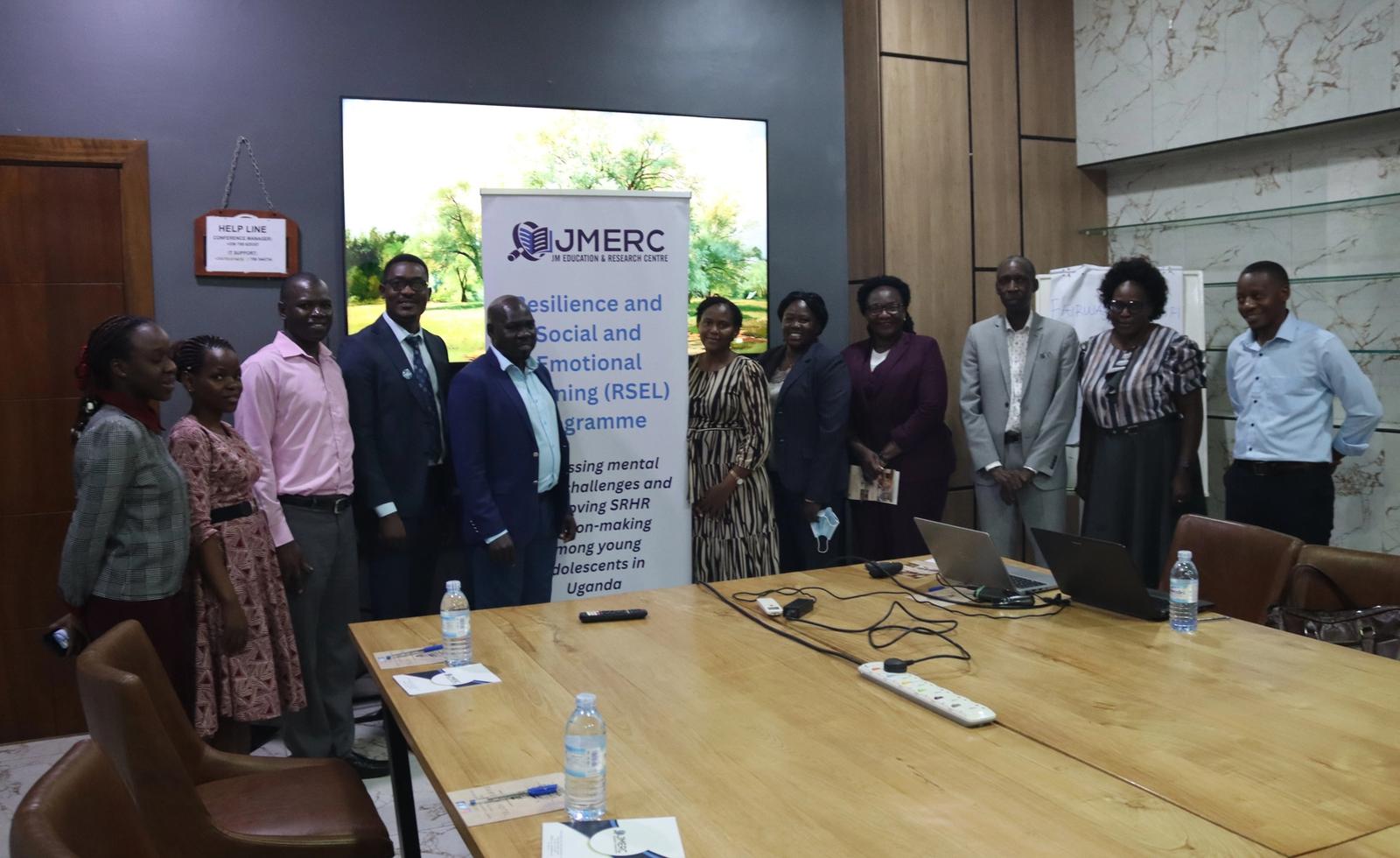
1st October, Kampala,Uganda: JMERC convened the inaugural National Advisory Group- NAG meeting under the Resilience and Social Emotional Learning-RSEL Programme, bringing together government representatives, academia and sector experts to provide strategic guidance on approaches that promote the wellbeing of young adolescents aged 10–14 in Uganda.
The meeting marked an important milestone in the programme’s commitment to strengthening national ownership, fostering collaboration across sectors and ensuring that evidence generated through RSEL informs policy and practice.
The NAG brings together representatives from the Ministry of Education and Sports, the Ministry of Health, the Ministry of Gender, Labour and Social Development, Makerere University and development partners. Members bring expertise in mental health and psychosocial support, adolescent health, school health, guidance and counselling, teacher education and family affairs.
This diverse representation reflects a central principle of the RSEL Programme: the challenges affecting young adolescents are interconnected and cannot be addressed by any single sector working in isolation. Mental health, education, gender, child protection, adolescent health and family wellbeing all play a critical role in shaping adolescents’ experiences and development.
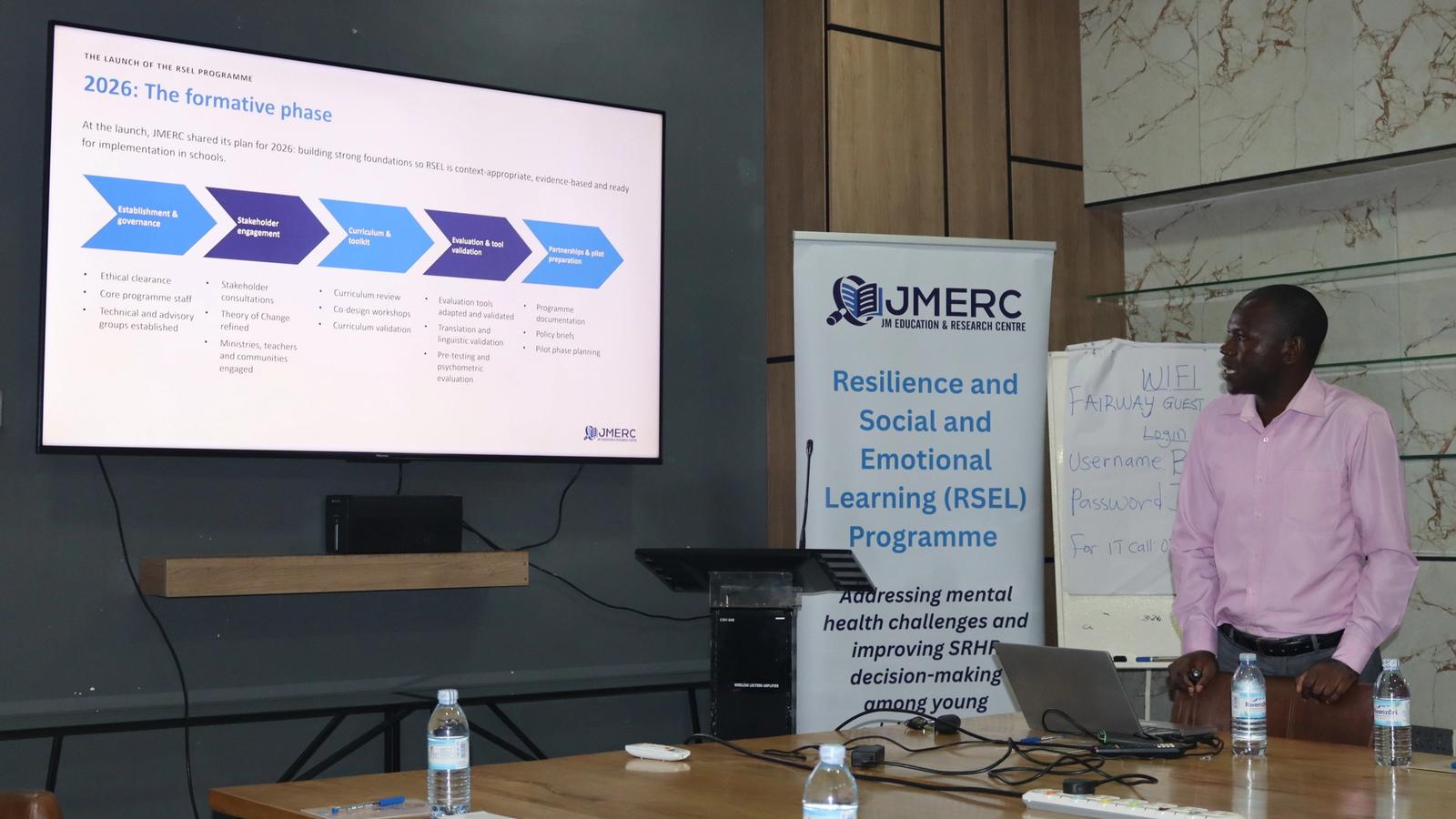
Addressing these needs requires stronger inter-sectoral collaboration and, as members emphasised during the meeting, intrasectoral collaboration to improve coordination within sectors and institutions. By bringing these perspectives together, the NAG will help strengthen alignment between programme implementation, national priorities and existing systems.
Strengthening strategic guidance and national ownership
Dr. Irene Mwenyango from Uganda’s Ministry of Health was selected as Chairperson of the RSEL National Advisory Group. In this role, she will lead the group in providing strategic and policy guidance, reviewing programme milestones and outputs, supporting alignment with national systems, and advising on sustainability and pathways to scale.
The establishment of the NAG is an important step towards ensuring that RSEL is not implemented as a standalone initiative, but is informed by Uganda’s existing policies, institutional expertise and community priorities.
For JMERC, national ownership is central to the programme’s long-term vision. The ambition is to see RSEL approaches developed and strengthened in partnership with Uganda’s systems, experts and communities, creating opportunities for the programme’s learning and evidence to contribute meaningfully to policy and practice.
Through its advisory role, the NAG will help connect research and implementation with the priorities of government and other stakeholders, while laying the groundwork for sustainability beyond the programme period.
Building pathways for sustainable change
Beyond its formal mandate, the inaugural meeting opened important conversations on how RSEL can deepen its impact and strengthen local ownership. Discussions explored community engagement, district-level involvement, digital approaches to mental health support, and opportunities to bring additional actors and district education structures into the programme.
These conversations highlighted the importance of moving beyond programme-level interventions towards approaches that can be embedded within existing structures and sustained by the institutions and communities that serve young adolescents.
The NAG provides a platform for continued dialogue, collective problem-solving and shared accountability. By drawing on diverse expertise and fostering collaboration, the group will help ensure that RSEL remains responsive to the needs of young adolescents while contributing to stronger systems for their wellbeing.
JMERC appreciates all National Advisory Group members for their commitment, time and willingness to contribute their expertise to this journey. When evidence, policy and practice come together, we create stronger foundations for improving the wellbeing of young adolescents and sustaining positive change in Uganda.