
Media Corner
JMERC at the 2nd East African Community-EAC Regional Education Conference
The conference brought together Ministers and senior government officials, researchers, development partners, civil society organisations, academia and other education stakeholders.
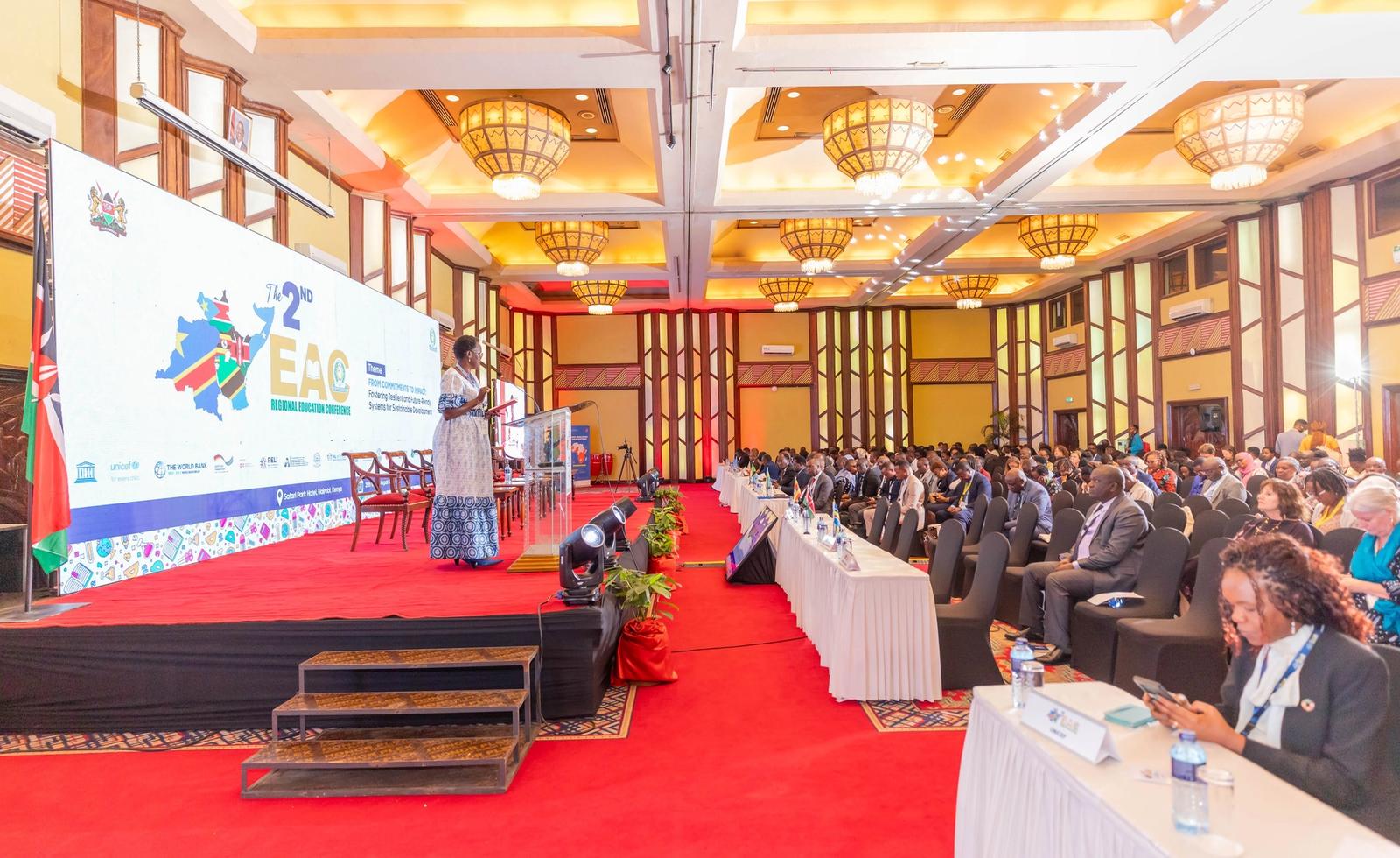
We joined education stakeholders from across East Africa at the 2nd East African Community (EAC) Regional Education Conference, held from 25–28 August 2026 in Nairobi, Kenya.
Convened under the theme —From Commitments to Impact: Fostering Resilient and Future-Ready Systems for Sustainable Development,— the conference brought together Ministers and senior government officials, researchers, development partners, civil society organisations, academia and other education stakeholders to exchange evidence, reflect on progress and challenges, and strengthen collective action for education transformation in the region.
For JMERC, the conference provided an important platform to share evidence from our work, contribute to regional dialogue and engage with partners working to strengthen education systems across East Africa.
JMERC contributing to regional evidence and dialogue
JMERC was represented by the Executive Director Dr. John Mary Vianney Mitana, Head of Communications, Advocacy and Partnerships Shaylor Mwanje and Gender and Girls Education Officer Brenda Nagasha.
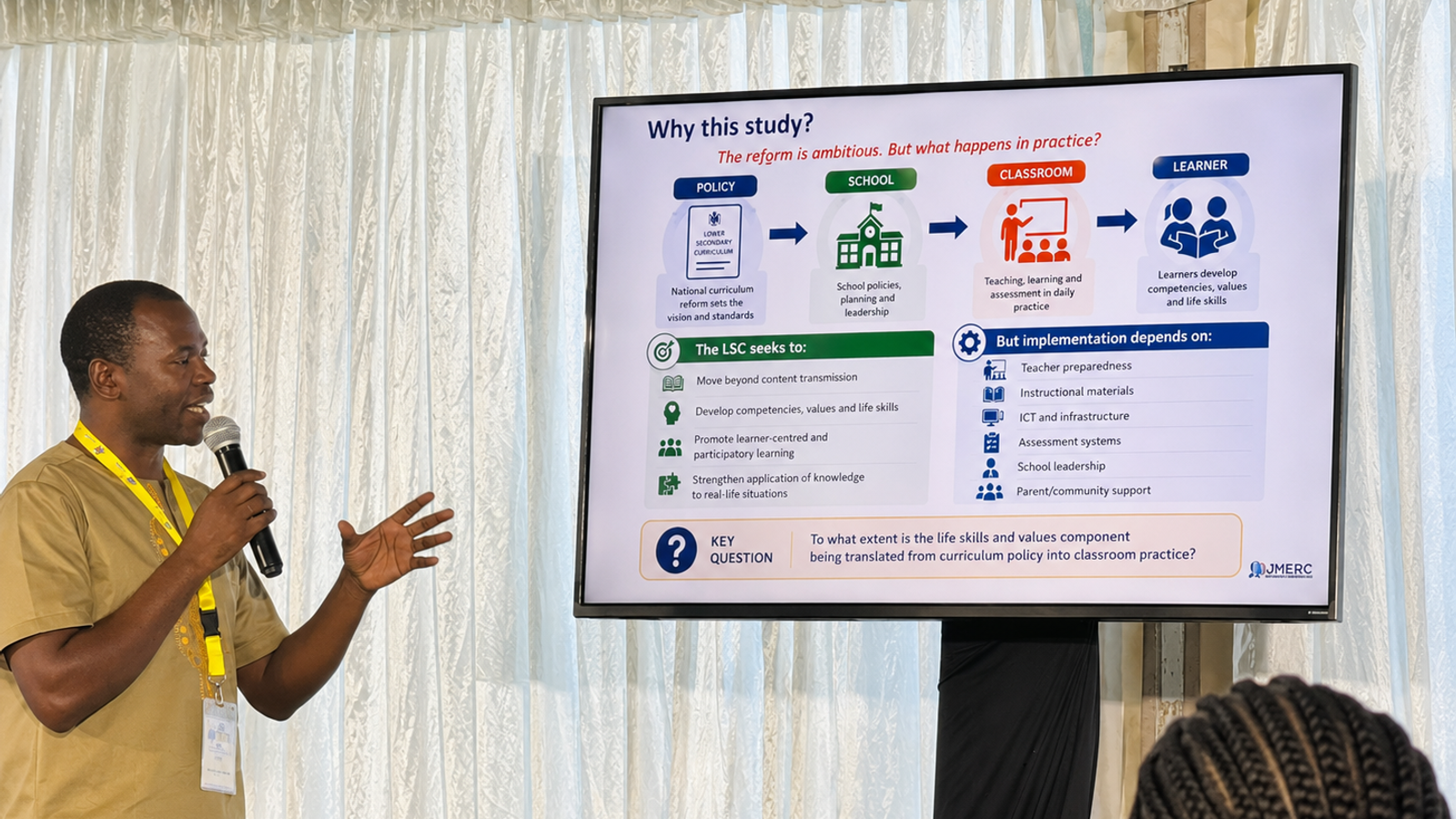
Dr. John Mitana, presented research on:
“Data-Driven Insights into Implementation and Efficiency in the Teaching and Assessment of Life Skills and Values under Competency-Based Curriculum in East Africa: A Case Study of Uganda.”
The presentation contributed to discussions on data-driven decision-making, implementation and the use of evidence to strengthen teaching, learning and education leadership.
The emphasis on data and evidence was strongly reflected in the Conference Communiqué, which calls for stronger regional education data systems, cross-border research and evidence sharing, as well as greater capacity to translate data into classroom action, policy and resource allocation.
JMERC also contributed to discussions on inclusive education, adolescent agency, and wellbeing, with Brenda Nagasha and Shaylor Mwanje presenting work on strengthening adolescent girls’ agency and wellbeing in Uganda through our Resilient Adolescents Girls Social Emotional Learning (REASEL) Programme.
Convening conversations on technology, assessment and education impact
JMERC also played a convening role during the conference.
Shaylor Mwanje chaired a session under the EdTech and Digitalization sub-theme focused on Educational Technology for Assessments, bringing together perspectives and presentations from organisations and education actors working across the region.
Brenda Nagasha also chaired a parallel session focused on data-driven decision-making and education impact, creating space for participants to examine how evidence can better inform education practice and systems.
These engagements reflect JMERC’s broader commitment to connecting research, communication, advocacy and partnerships to support evidence-informed education transformation.

From commitments to impact
The conference recognised progress across the EAC, including advances in foundational learning, early childhood education, teacher development, school leadership, inclusive education, digitalisation, data use, TVET and regional cooperation. At the same time, participants acknowledged persistent challenges in translating commitments into equitable and measurable improvements in learning.
The resulting Communiqué places particular emphasis on moving from commitments to implementation and measurable results. Among the regional priorities are foundational learning, teacher workforce and continuous professional development, data systems and digitisation, inclusive education and equity, and TVET and school-to-work transitions.
These priorities strongly resonate with JMERC’s work across foundational learning, adolescent agency and wellbeing, social and emotional learning, teacher development and education systems strengthening.
The Communiqué further commits the EAC region to strengthening collaboration in sharing evidence and experiences, while adapting approaches to national contexts and institutional realities. Progress will be monitored through an accountability framework with regional and country-owned priorities and targets towards 2028.
Looking ahead
The 2nd EAC Regional Education Conference reinforced the importance of collective responsibility, evidence and sustained collaboration in building education systems that are resilient and future-ready.
For JMERC, participation in the conference was an opportunity not only to share our work, but also to listen, learn, build partnerships and contribute to the regional conversation on what it will take to translate evidence and commitments into meaningful change for learners.
As East Africa looks towards 2028 and beyond, JMERC remains committed to working with governments, communities, researchers, educators and partners to strengthen education systems that are inclusive, responsive, evidence-informed and centred on the wellbeing and learning of every child and young person.
The conference also looked ahead to the 3rd EAC Regional Education Conference, which will be held in Uganda